
Pilot Rosters, Open Marketplace & Career Progression
This release represents one of the largest structural updates to FSCharter since launch.
The focus has been on reducing friction and making long-term progression feel more intentional for both pilots and company managers. Core systems such as contracts, job discovery, company interaction, and rank progression have been reworked to and make the platform easier to understand and operate for both beginners and long term users.
For pilots, the aim of this update has been to make jobs much easier to find and to reduce the overhead of using FSCharter. For managers, the update brings better tools, less micro-managing, and more control over how companies are structured and run.
We've updated the the documentation to reflect this change and we'll be updating the videos soon. Here are the most notable documentation pages that have changed:
Many of these changes also lay the groundwork for future features and improvements. As always, this release reflects feedback from the community and ongoing use of the platform - thank you.
Introducing Pilot Rosters
The contract system has been replaced with permanent Pilot Rosters.
Pilots now join a company’s roster on an ongoing basis, allowing continued access to jobs without needing to renew contracts. This, as you'll see in later sections, also enables us to build long-term progression routes within a company.
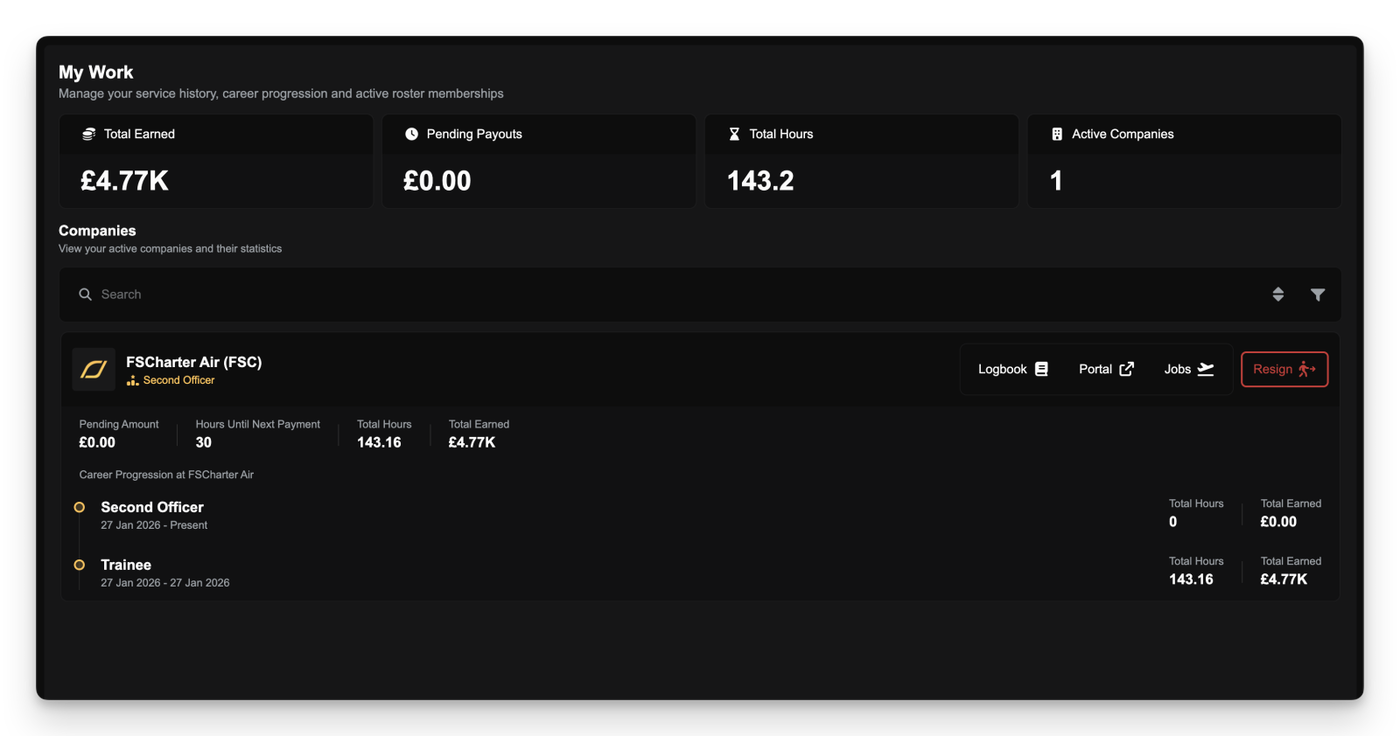
The new Roster system behaves likes the old contract model (hourly pay and rank-based earnings), but massively reduces the administrative overhead of contract management.
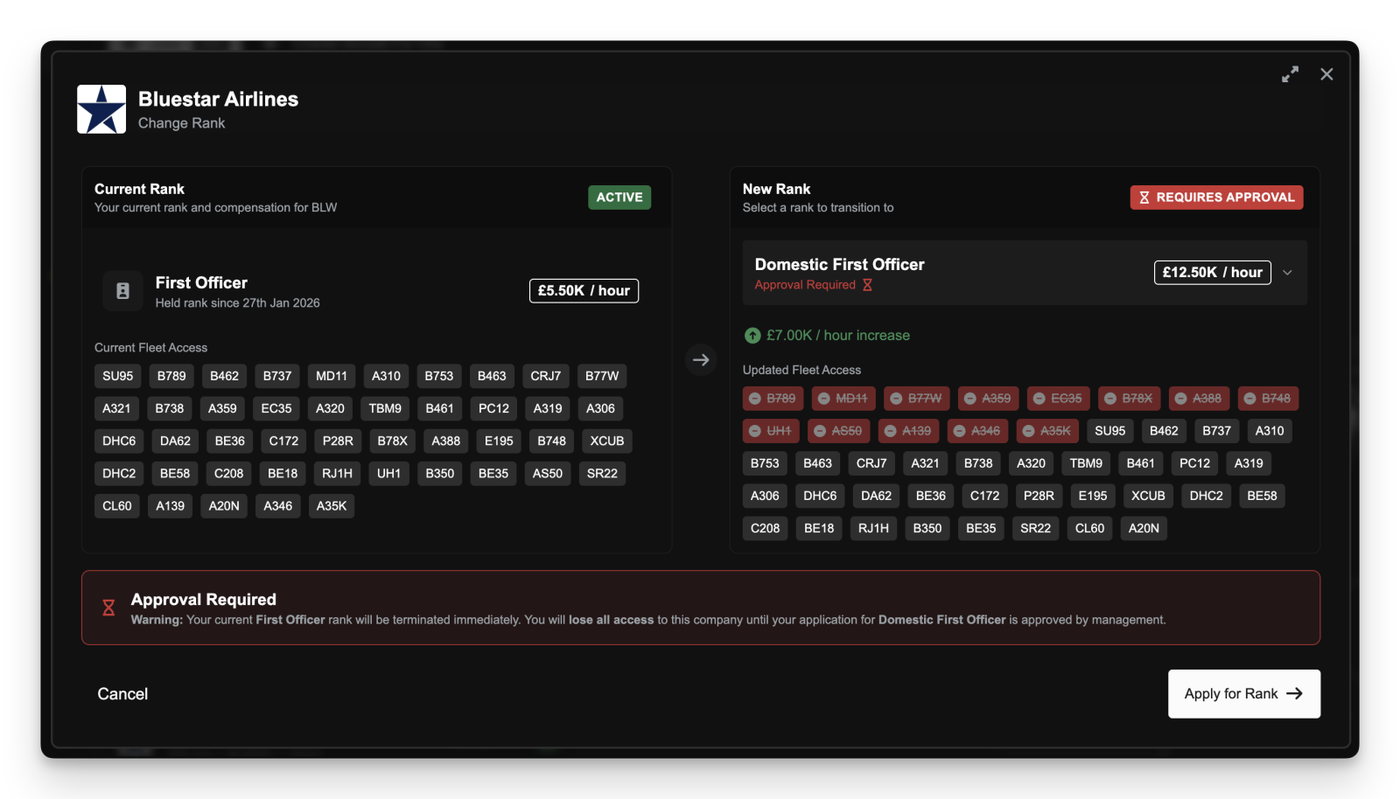
One of the key changes enabled by this system is rank flexibility. Pilots are no longer tied to a single contracted rank. If the requirements for multiple ranks within a company are met, pilots can switch between them freely to access different aircraft types or pay structures.
Attention Managers: Existing contracts have been automatically mapped to the appropriate ranks where appropriate. If the new rank has different pay and/or pay interval to the old contract then the contract with the user will be terminated and any due funds paid out. It is recommended that Rank and Pay settings are reviewed to ensure values are configured correctly under the new system.
Attention Pilots: If you had an active job during the migration and we were unable to manually map your contract to a new rank you will be paid a one-off payment for the value of your flight. You will not lose out on revenue.
The Open Job Marketplace
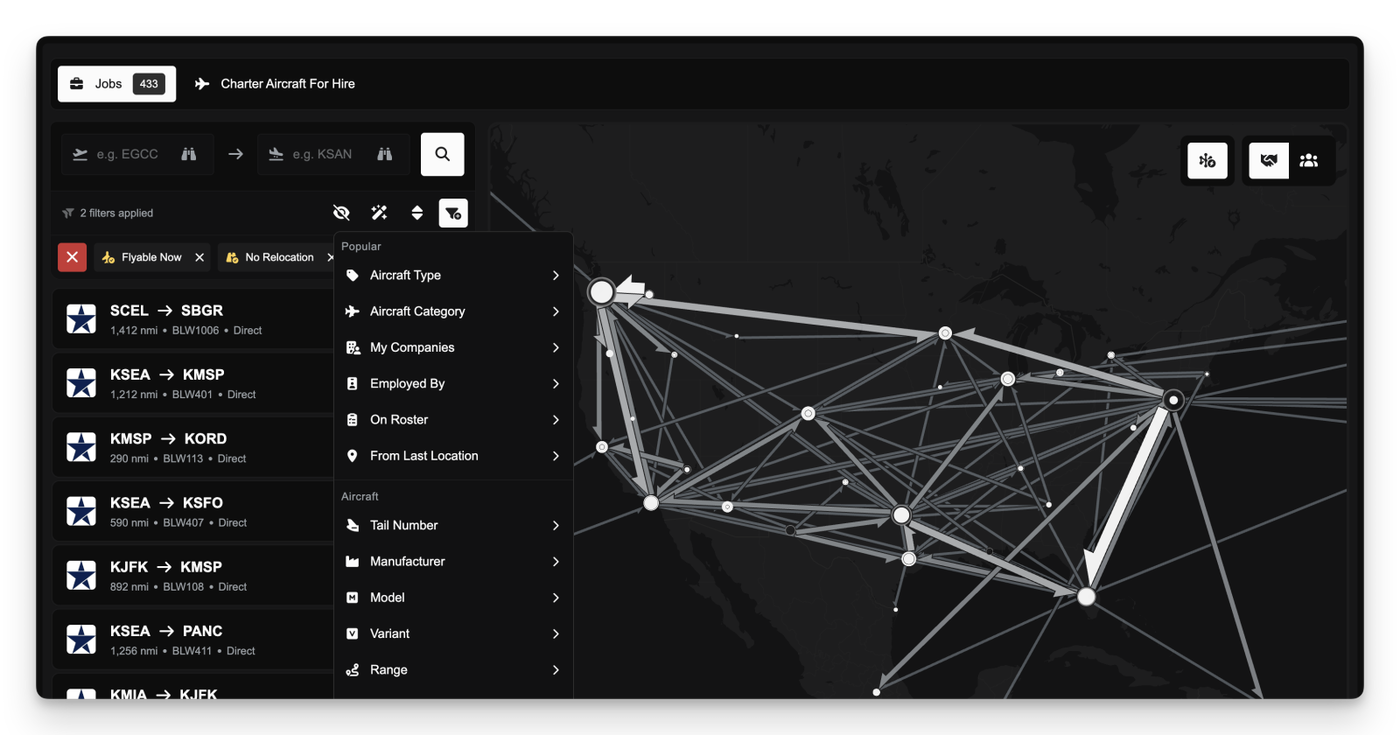
The Job Marketplace has been redesigned to remove barriers to job discovery. All jobs that you are eligible for across FSCharter are now visible by default, regardless of current company roster membership. This replaces the previous model where visibility was limited, and allows pilots to explore routes and operators without needing to first accept contracts. The legacy 5-contract limit for viewing jobs is also gone, removing the guesswork from finding jobs you actually want to fly.
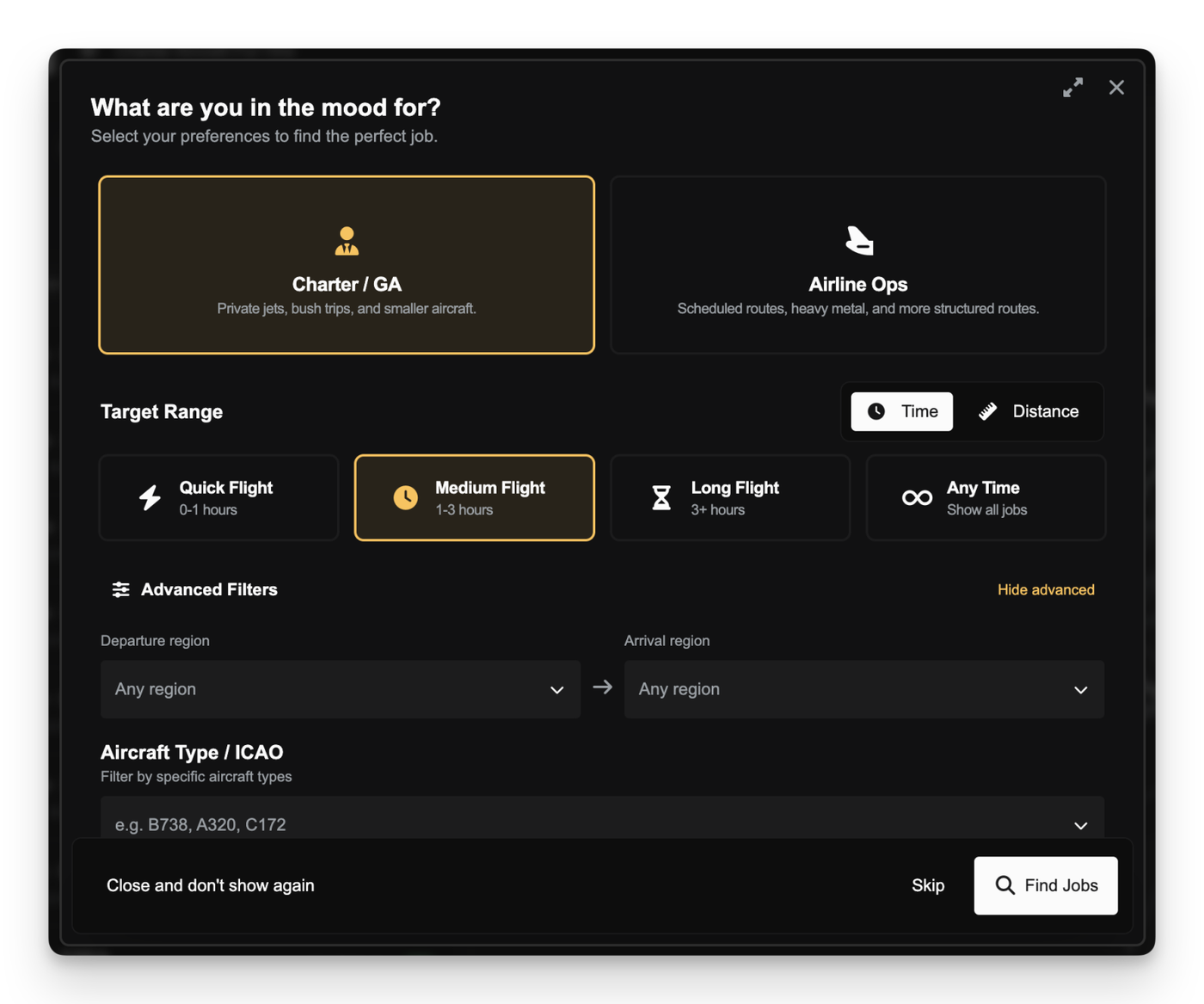
To support faster and more approachable job discovery, particularly for newer pilots, the Job Search Assistant has been introduced. It provides a guided way to surface suitable flights based on factors such as distance, duration, and aircraft type, without needing to configure complex filter combinations.
For more experienced users, the main filtering system has been reorganised into clearer, purpose-driven sections covering Popular, Aircraft, Route, and Company filters. A dedicated sidebar also enables quick searches for jobs departing and/or arriving at certain airports.
Accepting a job will automatically add the pilot to the operating company’s roster if they are not already a member.
Company Portals & Progression
Interaction with companies has been restructured around the introduction of Company Portals. Each company now has a public-facing portal that can be viewed before applying, providing visibility into their operations and fleet. It also serves as the home for existing pilots, with quick links to manage career progression and view the job marketplace for that company.
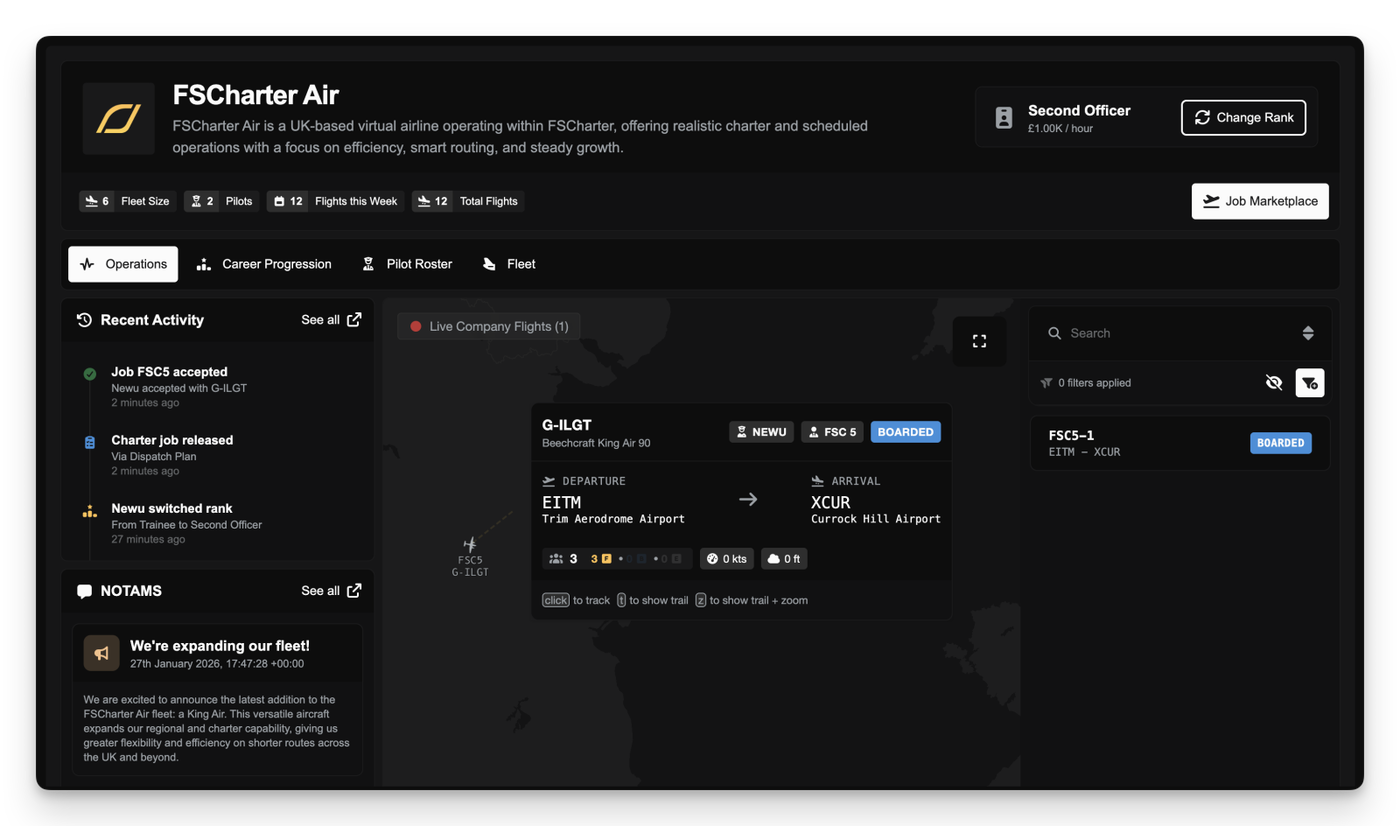
From the company profile, pilots can see operations, catch up on company acticity, read NOTAMS, and quickly search for jobs associated with specific company aircraft.
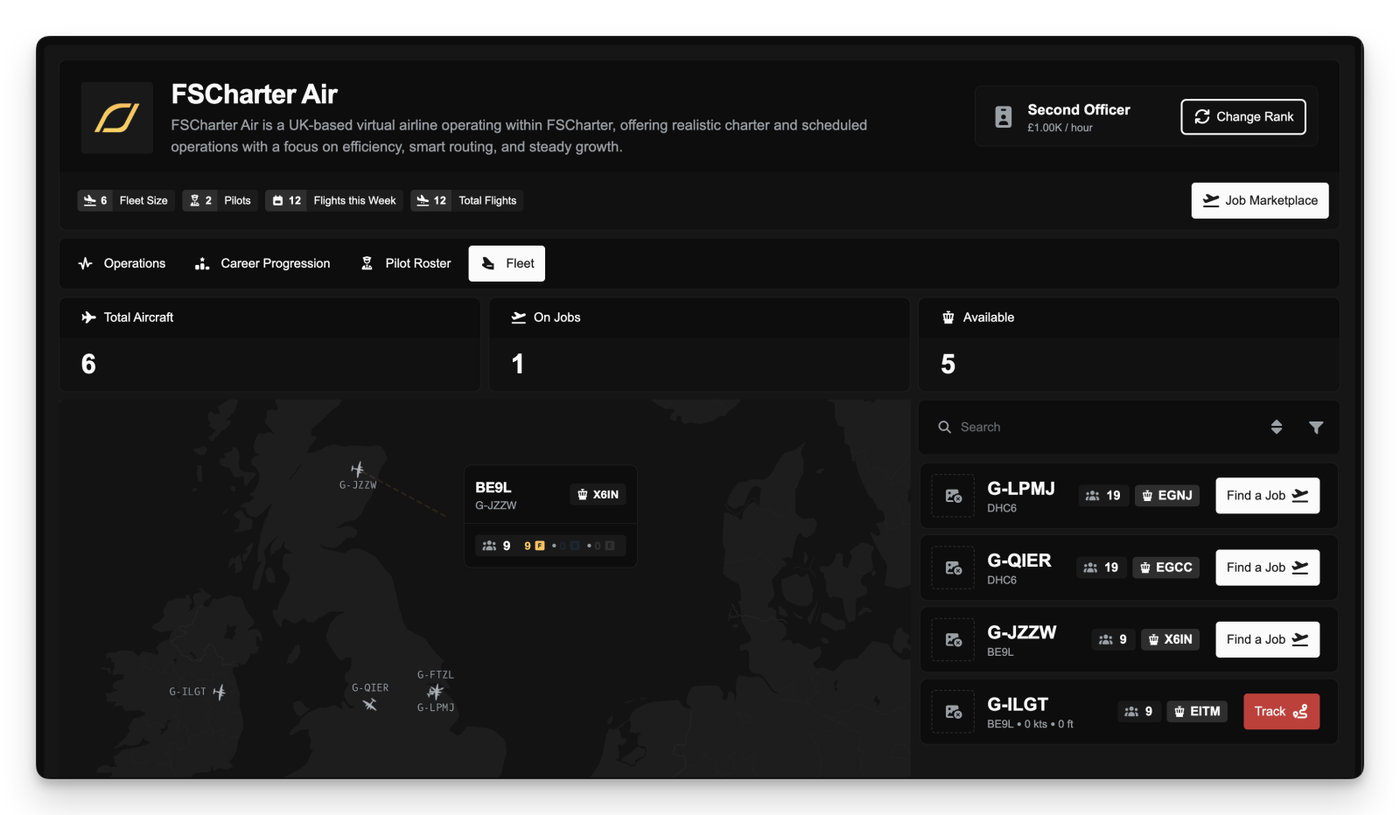
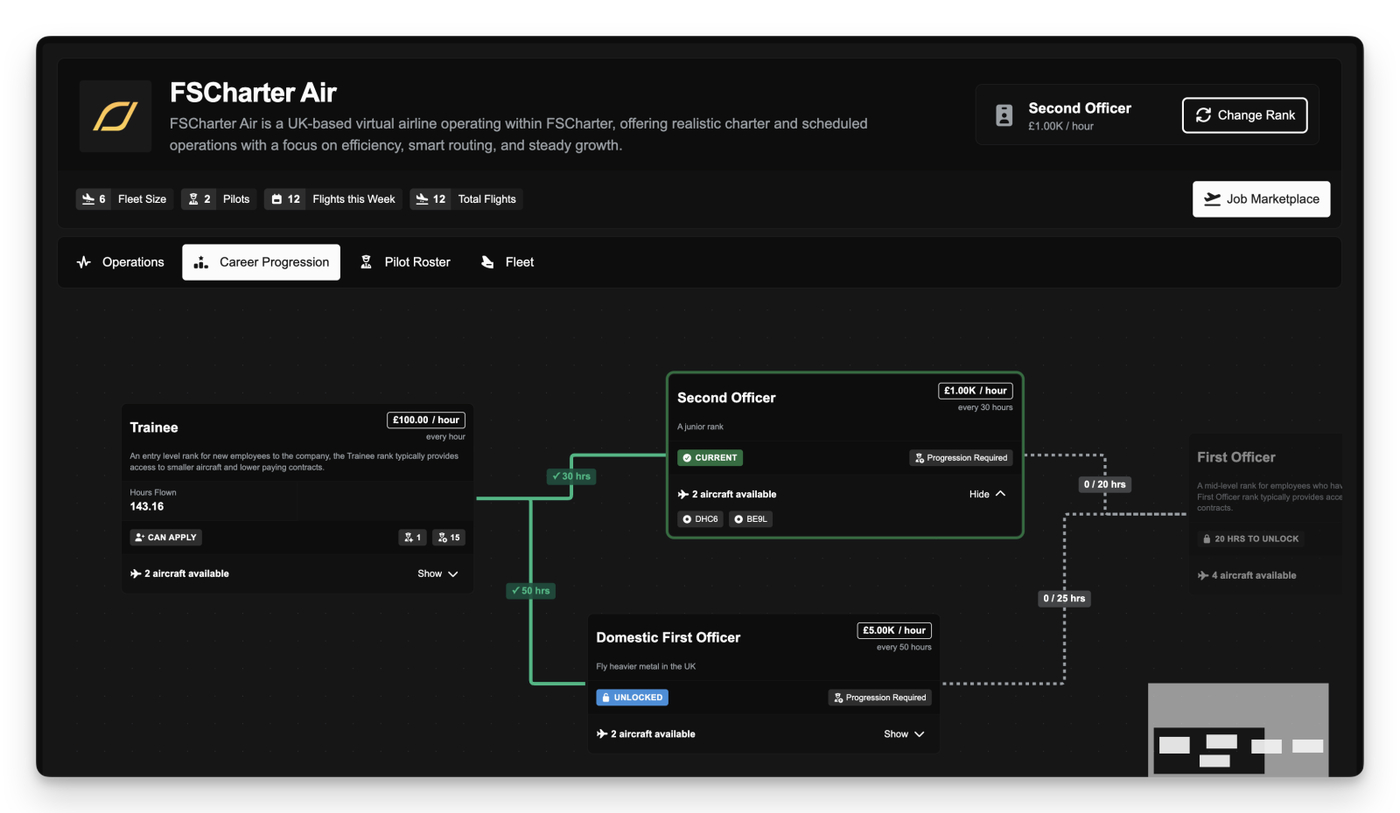
After joining a company's roster, pilots gain access to the Career Progression view. This tree-based interface maps out progression within the organisation, showing rank requirements, aircraft access, and the steps needed to unlock new ranks over time. From here pilots can apply for new ranks or switch between existing ranks that have been unlocked.
Alongside this, a new Company Directory page has been added to allow pilots to discover existing companies and better understand their structure, pay, activity, and areas of operation before committing.
Powerful Tools for Managers
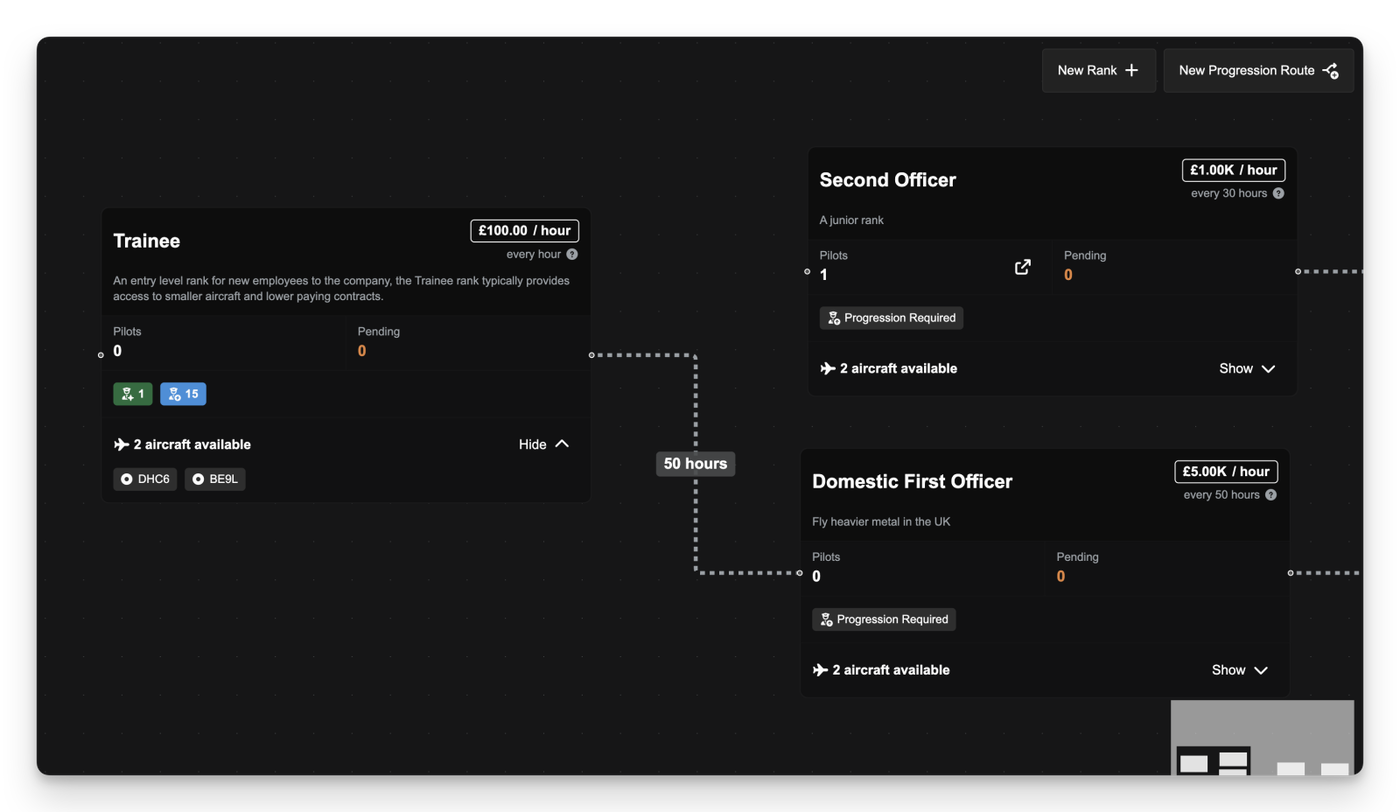
Management tools for company owners have been expanded and reorganised to support clearer planning. The new Rank and Progression Manager introduces a visual, drag-and-drop canvas for defining career paths and managing rank pay within a company. We've also introduced rank duplication as a quality-of-life improvement, allowing rank settings and aircraft constraints to be copied quickly when creating or adjusting progression structures.
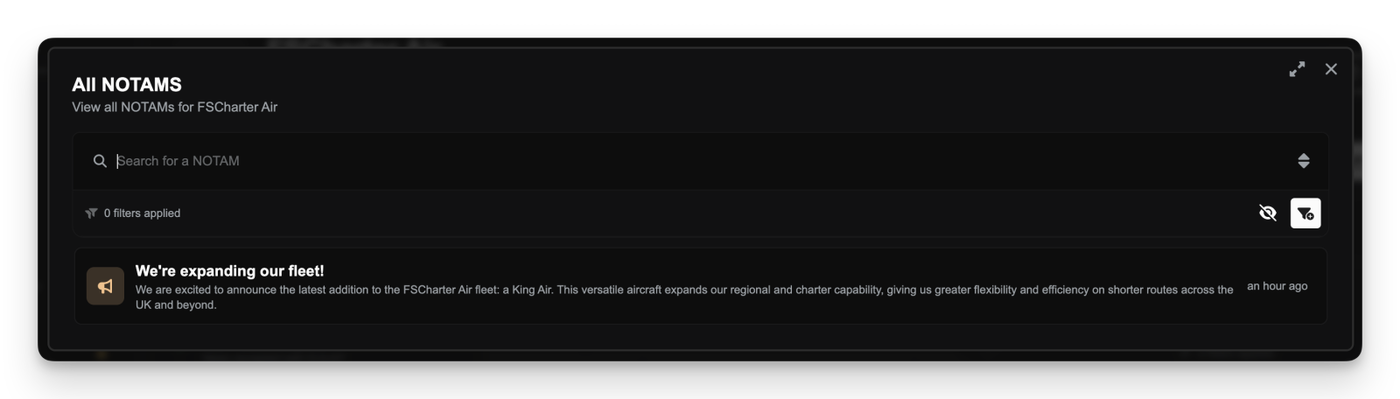
Communication with pilots has also been improved through the introduction of the NOTAMs feature. Managers can now issue Notices to Airmen, categorised as Announcements, Information, or Important, which are surfaced directly in the Pilot Portal to ensure key updates are visible to the roster. All active roster pilots also receive FSMail messages when new NOTAMS are published.
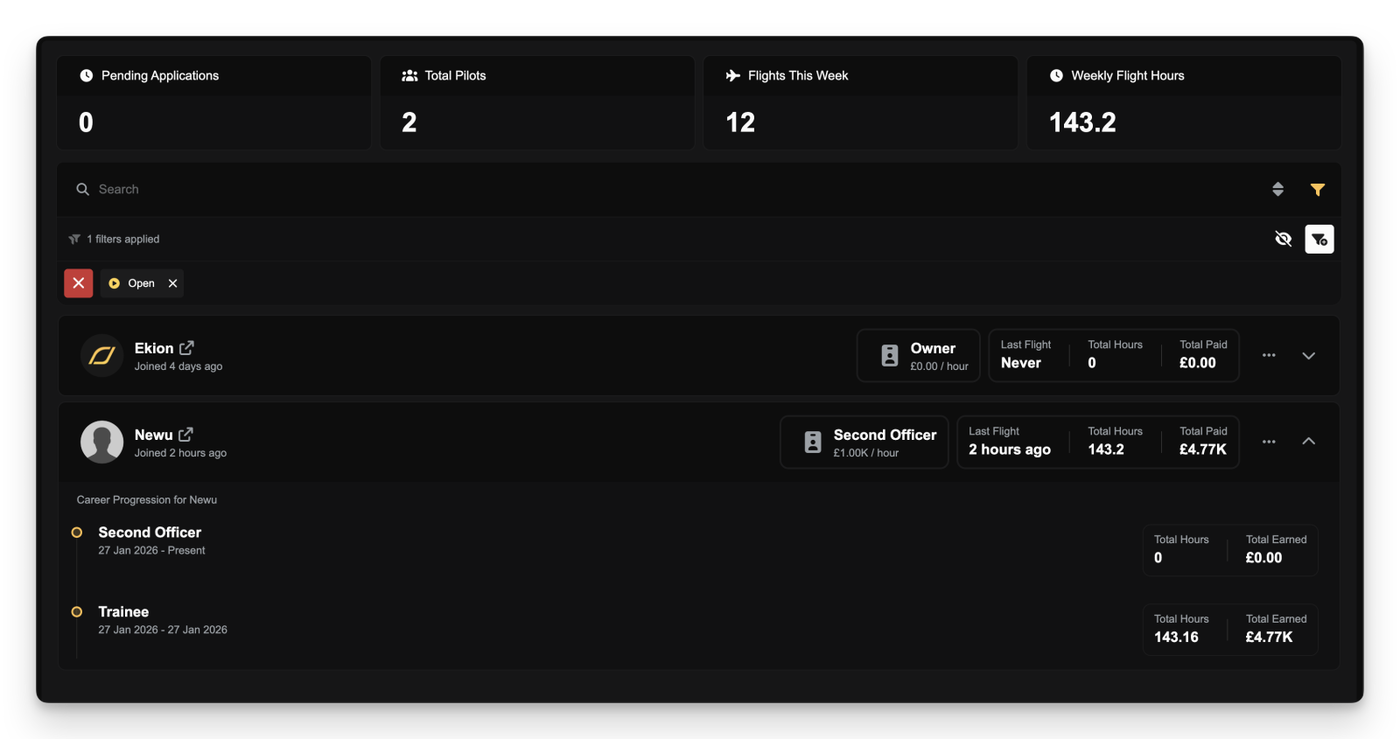
A dedicated Roster Management page has also been added to provide better oversight of pilot activity, including hours flown and incoming applications.
Other Improvements
- Redesigned Filter List: Active filters are now displayed in a wrapped layout, allowing you to see every applied constraint at a glance without horizontal scrolling or losing access to the filter and sort buttons.
- Persistent Pilot Mode: We've introduced an opt-in Persistent Pilot Mode that, if enabled in your settings, automatically applies the new
From Last Locationfilter to jobs so that only show jobs departing from your last arrival airport are shown by default. - Aircraft Group Constraints: Managers can now assign rank access based on Aircraft Groups.
- Smart URL Sync: The browser URL now automatically updates to reflect your active tabs and filters, letting you bookmark specific marketplace views or refresh the page without losing your place.
- Region & Flight Time Filters: Added new filter options to search for jobs by global region or specific flight duration ranges.
- UI Polish: Tweaked the sidebar menu order and refined styling on various components for a cleaner look.
- Heliport Filters: Added demand filters to exclude Heliports from demand search. This filter is applied by default. Also added demand filters to only show Heliports in demand search.
- Quick Maintenance Actions: Added visual indicators for overdue maintenance in the Aircraft list in the Operations Cockpit, allowing you to identify and start maintenance directly from the list without navigating away.